
How To Solder – A Simple Guide For Beginners and Hobbyists

Man soldering (illustration)

Everyone can learn how to solder. And it’s an important skill to know want to build electronics.

Basic soldering is easy. All you need is a soldering iron and some solder. When my dad taught me as a teenager, I remember picking it up quite fast.

In this soldering guide, you’ll learn first learn to solder two wires. Then you’ll learn to solder components on a circuit board. If you’re already familiar with this, consider jumping over to my guide on SMD soldering or reflow soldering.

Also, check out my article on the soldering tools you need to get started.

Electronic Schematics – What You Need To Know

Electronic schematics are like recipes for electronics. They tell you what ingredients to use and how to mix the ingredients. But instead of using text to explain the recipe, a drawing is used.

They are also called circuit diagrams. Learn how to read schematics here.

Circuit Ideas And Where To Find Them

Circuit ideas are everywhere! There are many places to find cool circuits.

The greatest sources for my inspiration are hacker/maker/electronics blogs, schematic webpages, hobby project pages, and open-source hardware companies.

Or you can also check out some electronic kits for inspiration.

Sometimes I just want to try to replicate an electronic circuit I’ve found on the web. Either because it is something I need or just to prove to myself that I can do it. Like this amplifier circuit diagram.

Sometimes I find something cool that I want to modify and improve on. And other times I get completely new circuit ideas out of the blue that I want to build.

How To Build An Automatic Night Light Circuit

In this tutorial, you’ll learn how to build an automatic night light circuit that turns on when it gets dark. It’s a simple circuit that you can build on a breadboard.

This circuit shows you how to do it with an LED. But you can use the same principle to turn on bigger and brighter lights too.

Find the breadboard diagram and parts list below the video.

Cap Half Full #5 – Let’s build a buck converter!

In this episode, we start out with the idea of building a buck converter with a microcontroller. We realize that we’ve never built a buck converter before, so we go through our thought process live to figure out what we need to do. We built one buck converter each. Elias used a Bluepill and Oyvind

What Is Electric Current?

Electric current is what you get when electric charge moves around a circuit. It’s pretty simple when you finally get it. But there are some common pitfalls that can give you the wrong idea when learning.

And if you don’t know what current is and how it works, it’s a huge source of confusion when learning electronics.

Ohms law cartoon showing that electric current flows.

My goal is that after reading this article, you’ll understand what current is. And you’ll understand that a resistor must have the same amount of current going into it as going out from it.

How to Build an Arduino Theremin

In this short tutorial, you will learn how to build an Arduino Theremin. You only need three components plus the Arduino, wires, and breadboard.

Use the breadboard diagram or the video below to see how to connect everything.

AC vs DC: The difference between alternating and direct current

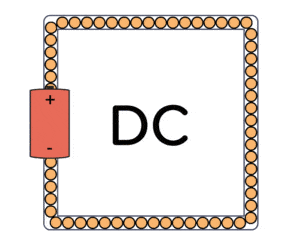
The difference between Alternating Current (AC) and Direct Current (DC) is simple: AC vs DC comes down to how the current flows. AC is a current that alternates its direction. It goes back and forth continuously. DC is a current that flows in one direction.

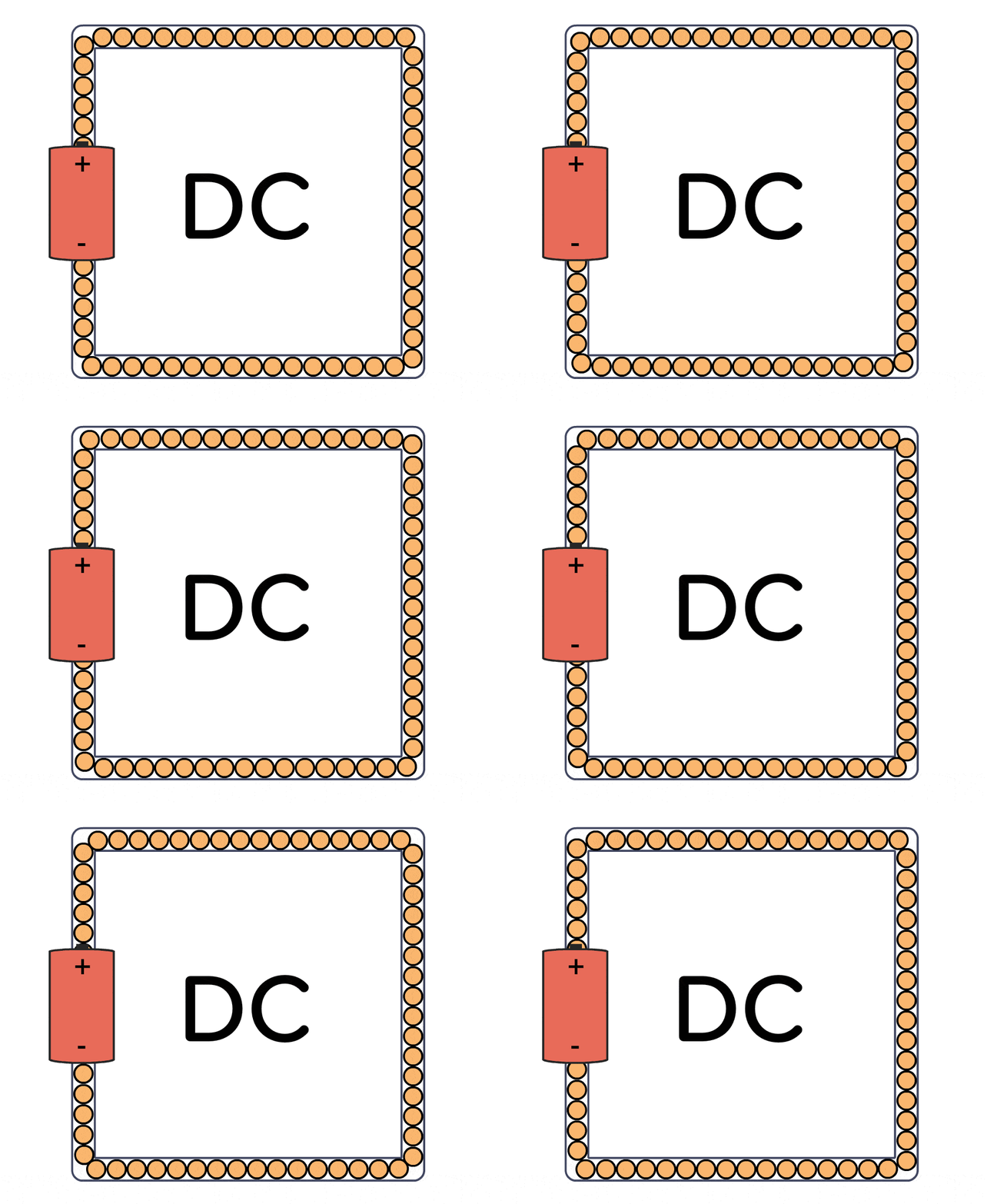
Current flow in a DC circuit:

Animated gif that shows the flow of current in a DC circuit

For example, a battery provides direct current. The current only flows one way out of a battery.

Simple VU-Meter Circuit

I put together this Voltage Unit (VU) meter using LEDs on a breadboard the other day. It only has 4 LEDs, but can easily be expanded to more:

It’s basically a simple display for showing a value. It’s originally for showing signal level in audio circuits, but there’s no reason you can’t use it to show temperature, rain intensity, light level, or whatever other value you are measuring.

What is Negative Voltage?

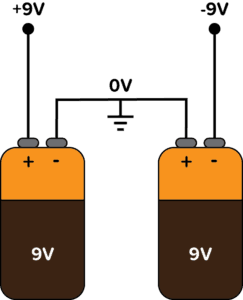
I’m going to show you what negative voltage is by putting John into a hole. As you’ll quickly learn, it’s nothing weird or mystical.

Meet John. He is 1.8 meters (6 feet) tall.

What does it mean that John is 1.8 m tall? Could you find his height by only looking at his head?

No. You have to compare the top of his head to the ground he is standing on to be able to find his height. That John is 1.8 m tall really means that the top of his head is 1.8 m higher than the ground that he stands on.

It’s the same thing with voltage. You can’t say anything about the voltage without comparing it to another point.

Why does the battery voltage change?

Today I got a question from Garry on the Ohmify community.

[GARRY]:
“When I measure the voltage of my 9V battery using my multimeter I get a reading of 9.06 when it is not connected to any circuit. When I hook the battery up to a simple circuit (i.e. 325 Ohm resistor in series with a red LED) and measure the voltage drop across the battery I get a reading of 8.65 V – why the difference?”